

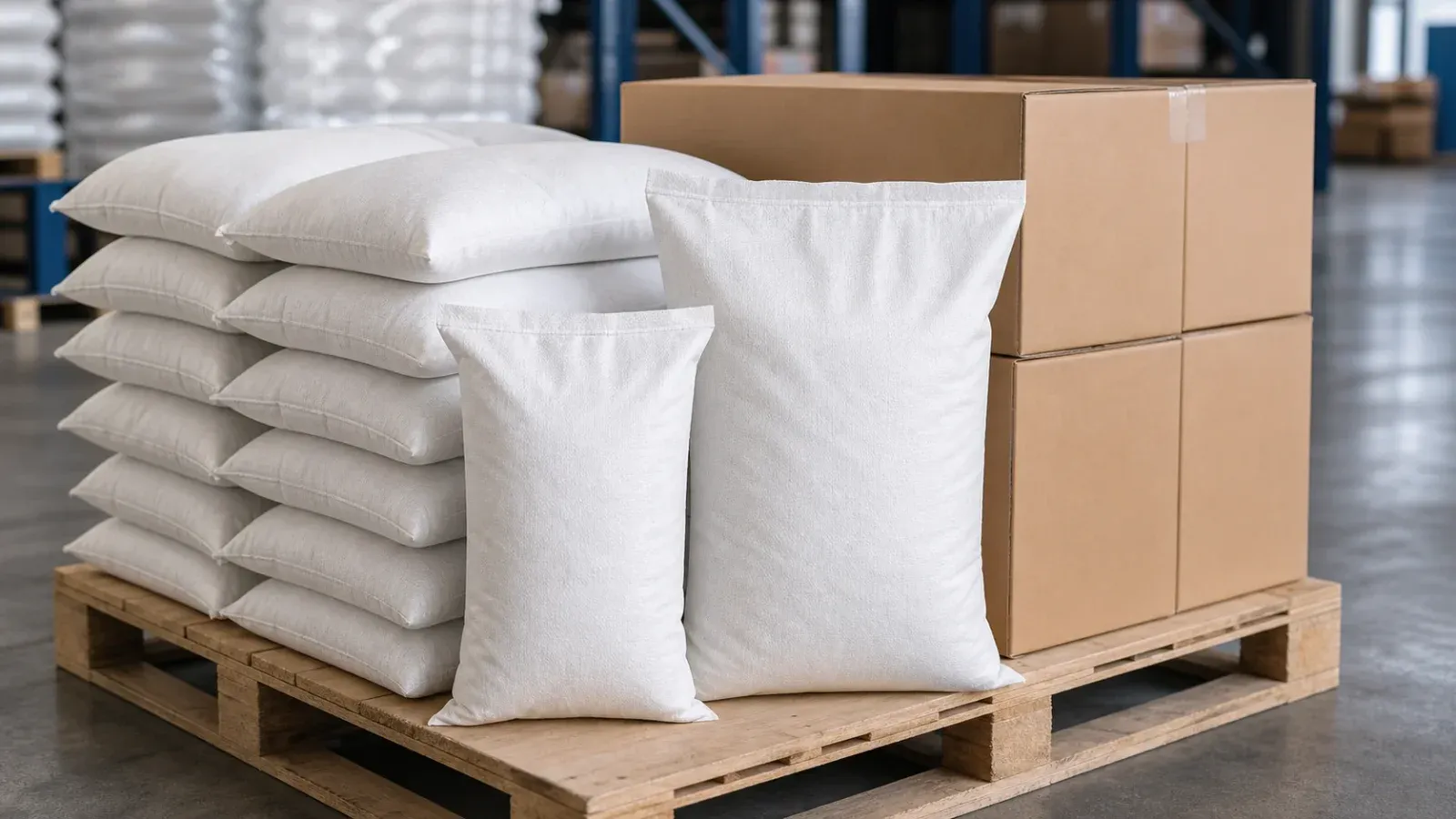
- 14 to 15 tOn pallets in a 20 ft container
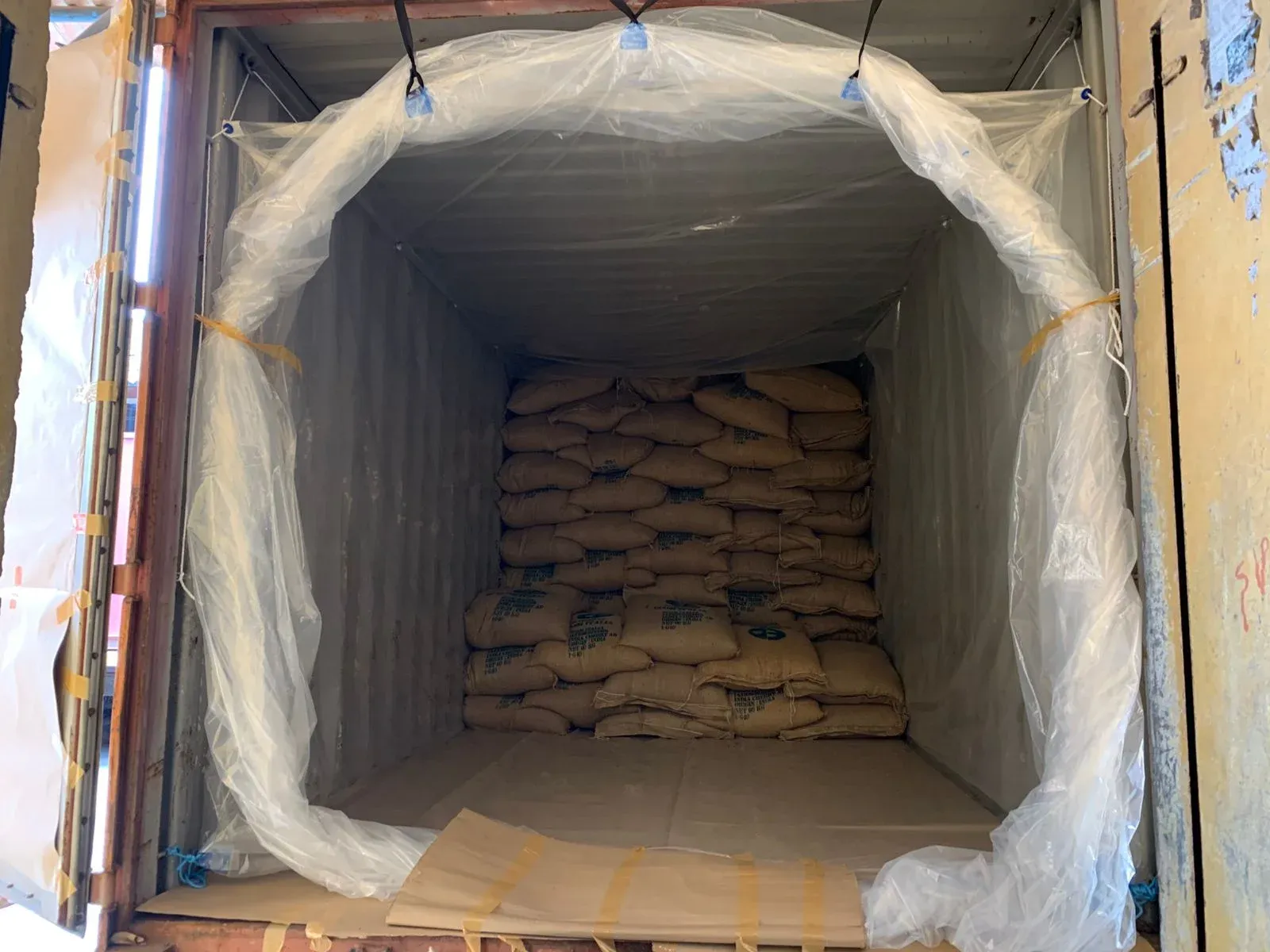
- Up to 18 tFloor-loaded, without pallets
- 5 MTOur minimum order
The short answer
| Loading | Net sugar | 25 kg sacks | Unloading |
|---|---|---|---|
| On pallets | 14 to 15 t | 560 to 600 | Forklift, quick |
| Floor-loaded | Up to 18 t | Up to 720 | By hand, slower |
The figures are for granulated arenga palm sugar or coconut sugar in 25 kg paper sacks with a PE liner. The exact load for your order is set in the proforma invoice and the packing list.
Why pallets carry less
Pallets take up floor space and weight, and the sacks on each pallet are stacked only to a safe height. A 20 ft container takes about ten standard pallets on the floor, so each pallet carries roughly 1.4 to 1.5 tonnes, or 56 to 60 sacks.
Floor-loading stacks sacks from wall to wall and close to the roof, so more sugar fits. The cost moves to the other end: your team carries every sack out by hand.
Which one to choose
- Choose pallets if your warehouse unloads with forklifts, labor at destination is expensive, or the sacks go straight into racking.
- Choose floor-loading if freight cost per tonne matters most and you have the people and the time to unload.
- Check your pallet rules. Most countries require wooden pallets to be treated and marked under the ISPM 15 standard. Ask your forwarder which pallets your port accepts.
Retail packs fill by space, not weight
Kraft pouches, stick packs and PE bags in master cartons carry less sugar per cubic metre than sacks, because of the cartons, the packaging itself and the air between them. A container of retail packs usually fills its space before it reaches its weight limit, so it carries less net sugar. We calculate the load for your pack format when we quote.
From order size to containers
| Order | How it ships |
|---|---|
| 5 MT, our minimum | Less than a full container. We quote the shipping options to your port. |
| 14 to 15 MT | One 20 ft container on pallets |
| Up to 18 MT | One 20 ft container, floor-loaded |
| More than 18 MT | Several containers. Tell us your volume and we propose a loading plan. |
Agree these points before you book
- Pallets or floor-loaded, written into the contract.
- Pallet type and size, if you choose pallets.
- Net and gross weight per container on the proforma invoice.
- Any road weight limit for delivery from your port to your warehouse. Your forwarder knows the local rules.
- Who unloads, and how many free days you have at the port before charges start.
- The documents that travel with the shipment, including the packing list and a COA for each lot.
Moisture matters on long routes. Sacks with a PE liner and a clean, dry container protect the sugar, and some buyers also ask for desiccant bags in the container. Our guide on how to import palm sugar from Indonesia covers the documents and the choice between FOB and CIF.
Questions buyers ask
The container itself is rated for more. For palm sugar in 25 kg sacks, up to 18 tonnes floor-loaded is the figure we plan with, because safe stacking and road weight limits usually set the real limit. Your forwarder can confirm the limit for your route.
Lead time is two to three weeks from a confirmed order. Sea transit time depends on your destination port, and your forwarder can confirm it.
We ship FOB Tanjung Priok or Belawan, and CIF to your port on request. Payment is by T/T or L/C.
Planning your first container? Request a free sample with the specification sheet and COA, and tell us your volume and packing format so we can quote the load.